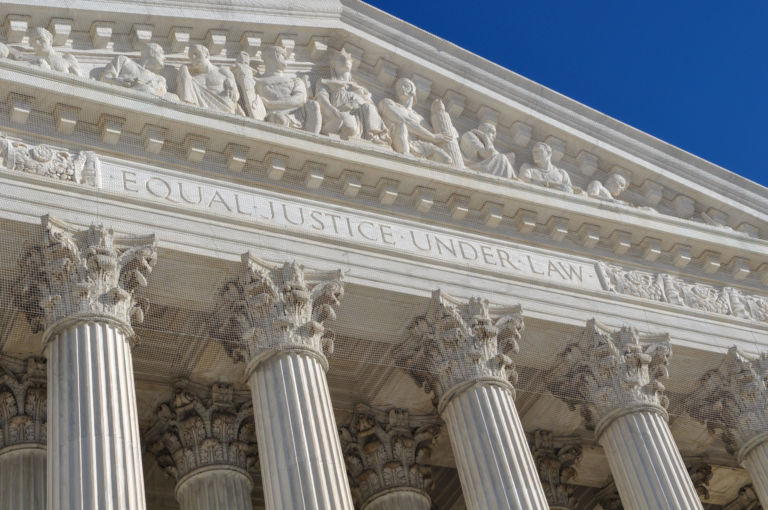
John Puri writes for National Review Online about the US Supreme Court’s approach to recent suits involving climate change.
This week, we learned from the Supreme Court that Justice Samuel Alito is recusing himself from the case of Suncor Energy v. Boulder County, with oral arguments set for next Monday. Alito offered no explanation for the decision, which was entirely his to make.
It’s a startling development, since you would think Justice Alito would be champing at the bit to vote in a case that could put an end to all state-level torts over interstate greenhouse-gas emissions for alleged climate damages, such as the lawsuit pursued by Boulder County in Colorado against the energy producers Suncor and ExxonMobil. Progressives have been calling for Alito to recuse himself, as they so often do, over Alito’s financial stake in a couple of oil companies and his relationship with a hedge-fund manager whose firm invests in Suncor. But Alito reports no stake in Suncor or Exxon, and he has waved off similar calls from the left to recuse himself from cases time and again. Also, why would he recuse himself only now, a mere week before oral arguments? …
… So the justices are in the uncomfortable position of having one set of conservatives and originalists petitioning them to reaffirm Massachusetts v. EPA in Suncor this term, and another set of conservatives and originalists asking them to overturn Massachusetts immediately afterward. That may be why Justice Alito seized the opportunity to recuse himself, thus raising the specter of a 4–4 split that leaves the matter unresolved for now. It may also be why the Court peculiarly asked the parties in Suncor to argue on whether it even has the authority to hear the case before it reaches the legal merits. If the Court finds it lacks jurisdiction, it can bow out on a procedural point.
Otherwise, if the justices rule in favor of the energy companies and block state climate torts, their options are limited to accepting a statutory argument they will likely soon repudiate or slamming down a transformative constitutional doctrine. Taking a pass seems mighty appealing.
The post SCOTUS faces tricky choices in climate suits appeared first on John Locke Foundation.