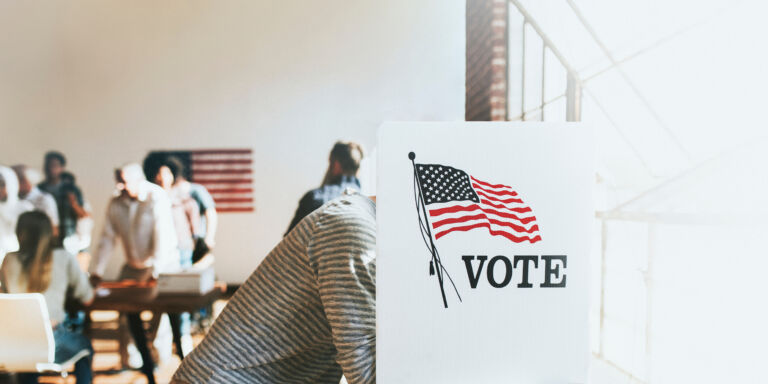
Chris Stirewalt probes the impact of President Donald Trump’s policies on the midterm elections.
After his first election, President Trump has been the greatest vehicle for voter mobilization in our lifetimes. That first win would have been a fluke, if not for the fact that once he had power, Trump and Trumpism profoundly affected voter intensity. Unfortunately for Republicans, that applies to both parties. The simplest way to understand the turnout surge since 2018 is that Trump brings voters out of the woodwork: lower-propensity, mostly white working-class voters who love the guy and the college-educated, high-propensity suburbanites who hate him like God hates sin.
So how will that work in the sixth and final election of the Trump era?
Republicans know that if there’s a typical dropoff — say 42 million fewer votes than two years ago — the absent voters will disproportionately be members of their party and sympathetic independents. This is why the president is raiding the federal treasury to run campaign ads for himself, sending checks to voters and promising much bigger payouts if Republicans stay in power. He’s barnstorming red states and, as promised, running like he’s on the ballot himself.
The scenario Republicans most fear is one in which there’s a second-midterm dropoff for Trump’s coalition like the ones that afflicted Obama and former President George W. Bush before him. Bush’s 2006 catastrophe is the one that’s haunting many in the GOP right now: high gas prices, an unpopular war and a sense of disorder in Washington. But what’s different now is that Democrats are mobilized in a way that exceeds that year or even the blue wave of 2018.
In the 21st century, primary election turnout has been probably the most reliable predictor of partisan turnout trends in general elections — not for each individual race but taken as a whole. In 2018, Democratic primary turnout was 8 points higher than it was for Republicans. This year, the margin swelled to 11 points.
We know for certain that Democrats are going to vote at very high rates.
The post Trying to assess who is going to decide the elections appeared first on John Locke Foundation.